How to Choose a Fragrance: Scent Families, Concentration, and Testing Tips
Choosing a fragrance is both personal and practical: it is about finding a scent that feels like you, suits the moment, and wears comfortably on your skin. Whether you are looking for an everyday perfume, comparing eau de parfum options, or shopping for a gift, the best choice starts with understanding how fragrance works. This guide breaks down scent families, concentration, testing tips, and buying cues so you can choose with more confidence and less overwhelm, with House of Marsté examples along the way.
What makes a fragrance feel right for you?
A fragrance feels right when it matches your taste, your lifestyle, and the way it develops on your skin over time. The same perfume can smell bright and airy on one person, then warmer or sweeter on another, because body chemistry, climate, skin moisture, and even clothing can influence how it performs. The goal is not to find the “best” perfume in general, but the one that makes you feel comfortable, polished, expressive, or memorable in the way you want.
That is why choosing a fragrance should be a slow, sensory process rather than a rushed decision at the counter. A scent needs time to unfold from its first spray to its dry-down. What seems sharp in the opening may become soft and elegant after an hour, while a sweet perfume may become richer, powderier, or heavier as it settles.
Start by noticing your real preferences. Do you like fresh citrus, soft vanilla, warm woods, blooming flowers, or warm spice? Your everyday environment also matters. A bold perfume may feel wonderful for evenings but too intense for a small office, while a subtle skin-like scent may be perfect for daily wear but too quiet for a special event.

The main scent families to know
Fragrance language can seem intimidating, but most scents fall into a few broad families. Learning these categories helps you describe what you like and avoid what you do not. It also makes shopping easier, especially online, where you cannot immediately smell the bottle.
Floral scents
Floral perfumes are built around notes such as rose, jasmine, orange blossom, tuberose, peony, iris, lilac, or lily. They can be romantic, powdery, fresh, creamy, green, or dramatic depending on the composition, and they can feel youthful and sparkling or mature and sophisticated.
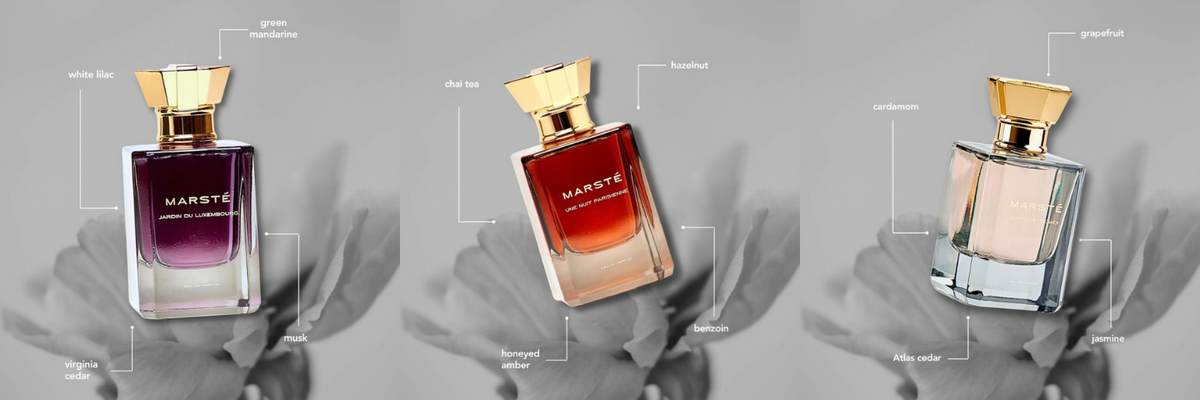
At House of Marsté, Jardin du Luxembourg shows the fresh, green side of florals, with white lilac, neroli, and petitgrain over cedar and musk. Montmartre Midi is sunnier and fruitier, with star jasmine, pear, and honeyed orange blossom.
Fresh and citrus scents
Fresh fragrances often include lemon, bergamot, grapefruit, mandarin, neroli, green leaves, or airy musks. These are popular for daytime, warm weather, work settings, and anyone who prefers a clean impression. They usually feel easy to wear, though some may fade faster than richer scent profiles.
Essence Mandarine is our brightest scent: green mandarin, lime, and orange leaves with ginger, anchored by musky ambrette seed so it lasts beyond the opening. Read more in what mandarin smells like in perfume.
Woody and earthy scents
Woody fragrance profiles use notes like sandalwood, cedar, vetiver, patchouli, oud, or moss. They can be dry, creamy, smoky, elegant, or grounding, and they often suit people who want something refined but not overly sweet.
Essence Santal centers on radiant New Caledonian sandalwood wrapped in soft musk, with nutmeg, cardamom, and orris. See what sandalwood smells like for more on the note.
Amber, gourmand, and spicy scents
Amber and gourmand perfumes tend to feel warm, sensual, and enveloping. Think vanilla, tonka bean, caramel, resin, cinnamon, cardamom, coffee, or soft balsamic notes. They are often appealing in cooler weather or evening settings, though lighter versions can be comfortable year-round.
Une Nuit Parisienne is our amber-gourmand: hazelnut, chai spice, and plum over black tea and Damask rose, settling into labdanum, vanilla, sandalwood, and musk. For a softer gourmand, Essence Vanille pairs creamy vanilla with woody coriander and key lime.
Concentration shapes the experience
One of the most useful things to understand is fragrance concentration: the amount of aromatic material blended into the formula. Performance also depends on ingredients, skin, weather, and application.
An eau de parfum often feels richer and longer-lasting than a lighter spray, but “stronger” is not always better. If you want a scent with a noticeable presence, eau de parfum is a strong choice. If you prefer something transparent and refreshing, a lighter format may suit you more.
Here is a simple way to think about the common options:
- Eau fraîche or body mist: usually light, casual, and easy to reapply.
- Eau de cologne: often bright and refreshing, with a lighter feel.
- Eau de toilette: noticeable but usually not too heavy.
- Eau de parfum: often deeper and more lasting, for elegance, projection, and a more complete perfume experience.
- Parfum or extrait: typically the most concentrated, often sitting closer to the skin while feeling dense and smooth.
Every House of Marsté fragrance and essence is an eau de parfum. Still, don't judge by concentration alone: a fresh eau de parfum may wear lightly, while a rich eau de toilette can feel powerful. Always test how a scent behaves on you. Our guide to eau de parfum vs. eau de toilette goes deeper.
How should you test perfume before buying?
Test perfume on skin, give it time, and avoid trying too many scents at once. Paper blotters are useful for a first impression, but your wrist or inner arm reveals how the fragrance actually interacts with you. Narrow your choices, then wear one or two finalists for several hours before deciding.
A perfume has stages. The top notes are what you smell first, often bright, fresh, or sparkling. The heart notes appear as the opening softens, revealing the main personality of the scent. The base notes arrive later and may include woods, musks, amber, vanilla, moss, or resins.
Use this testing routine when you are serious about choosing well:
- Smell from a distance first. Spray a blotter and let the alcohol settle for a few seconds before judging.
- Shortlist only a few. Choose two or three that genuinely interest you.
- Apply to clean skin. Test one fragrance on each wrist or inner arm without rubbing.
- Wait at least 30 minutes. Notice how the scent changes after the opening fades.
- Check again after a few hours. The dry-down often determines whether you will love wearing it.
- Consider your setting. Ask whether it suits your daily life, wardrobe, season, and comfort level.
Rubbing your wrists together is a common habit, but it can disturb the way the fragrance opens, so let it dry naturally. If you become nose-blind, step outside, drink water, or return another day.
Testing at home is even easier. The House of Marsté Discovery Collection includes 2ml of all six of our scents, so you can wear each for a full day before choosing. Our Discovery Set guide explains how.
Matching fragrance to occasion and mood
A well-chosen fragrance can support the way you want to show up. You do not need a large collection, but having a few different styles makes scent feel more intentional.
For daytime, many people prefer clean florals, soft musks, citrus blends, tea notes, or gentle woods, scents that feel present without overwhelming a room. Montmartre Midi and Jardin du Luxembourg both fit here. For evenings, richer notes such as vanilla, rose, spice, amber, or warm woods create more depth, which is where Une Nuit Parisienne shines.
Season also changes perception. Heat can amplify sweetness and projection, so fresh, green, citrus, or airy floral fragrances often feel better in summer. Cooler weather lets amber, gourmand, and woody notes shine.
If you are choosing perfume for a woman as a gift, avoid assuming that “feminine” means sweet or floral. Many women prefer crisp citrus, warm woods, soft musks, or unisex blends. Pay attention to what the person already wears, and if you're unsure, a discovery set lets them choose.
Smart buying cues for a better choice
Perfume packaging can be beautiful, but the bottle should not make the decision for you. Look instead for the clues that actually help you understand the scent:
- Read the note pyramid, but do not treat it as a guarantee. Notes describe an impression, not a list of raw ingredients you will always detect clearly.
- Look for the scent family. Floral, woody, fresh, amber, gourmand, or spicy categories help you predict the overall mood.
- Check the concentration. Decide whether you want something light and casual or fuller and longer-wearing.
- Think about wearability. A stunning scent is only useful if you enjoy wearing it in real situations.
- Test longevity realistically. Notice whether you still enjoy the fragrance after the opening has disappeared.
- Avoid panic buying. If you feel unsure, wait. A good fragrance should still appeal to you later.
Online reviews can help, but they are subjective. One reviewer’s “too sweet” may be your perfect warm signature. Use reviews to identify patterns, then trust your own nose.
Building a small fragrance wardrobe
You do not need dozens of bottles to enjoy perfume. A thoughtful wardrobe can be built around a few roles, keeping your choices useful rather than cluttered:
- Daily signature: soft, versatile, and easy to wear often, like Montmartre Midi.
- Fresh option: bright and green for warm or casual days, like Jardin du Luxembourg or Essence Mandarine.
- Comfort scent: warm vanilla or creamy sandalwood for relaxed moments, like Essence Vanille or Essence Santal.
- Statement scent: something richer for nights out and celebrations, like Une Nuit Parisienne.
House of Marsté adds one more option: layering. Because our layering essences are designed to work with the fine fragrances, a small collection can cover many moods. Une Nuit Parisienne with Essence Vanille feels warmer and cozier; Montmartre Midi with Essence Santal feels deeper and creamier. Our guide on how to layer fragrances explains how.
Sampling is the best way to build slowly. Over time, you may notice patterns: perhaps you love jasmine but dislike heavy patchouli, or you enjoy vanilla only when balanced with woods or citrus.

Caring for your perfume collection
Once you find fragrances you love, storage matters. Perfume can be affected by heat, light, and air exposure, which may change the scent over time. Keep bottles in a cool, dark place, away from windows, steamy bathrooms, and direct sunlight.
Apply fragrance to pulse points such as the wrists, neck, or behind the ears, and be mindful of quantity: two to four sprays are often enough. You can also spray clothing carefully, but test first, because some formulas may mark delicate fabrics. Applying to moisturized skin can also help fragrance feel smoother and last longer.
A more confident way to choose
Choosing a fragrance is not about following rigid rules. It is about learning how scent behaves, recognizing your preferences, and giving yourself enough time to decide. The more you test thoughtfully, the easier it becomes to understand which fragrances feel natural, expressive, and worth wearing. For more help, see how to find your signature scent.
Whether you love fresh citrus, soft florals, warm amber, or refined woods, the right perfume should feel like an extension of your presence. Let it support your mood, suit your life, and bring a little pleasure each time you wear it.